Article by Leo Zagami
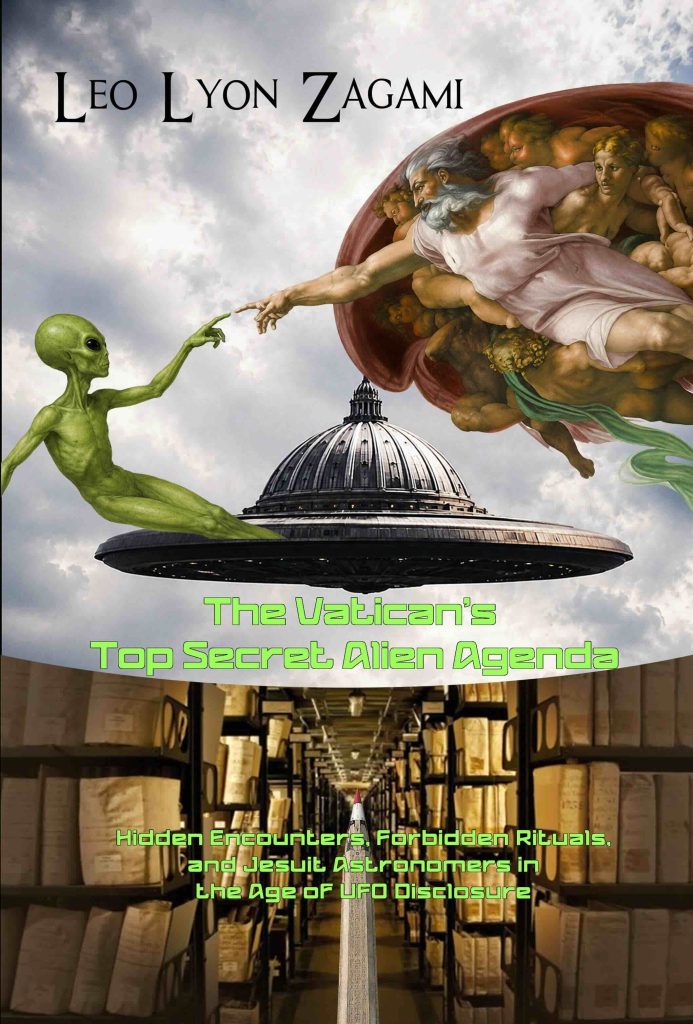
The US government is no longer pretending; after eighty years of denial, it has finally confirmed that real, technologically advanced, intelligent objects of unknown origin exist. President Donald J. Trump’s push for disclosure in recent months (https://www.war.gov/ufo/) is mainly for his own political agenda, as I anticipated in my latest book, The Vatican’s Top Secret Alien Agenda: Hidden Encounters, Forbidden Rituals, and Jesuit Astronomers in the Age of UFO Disclosure. His “soft disclosure” didn’t show anything groundbreaking, so now, the people who have kept this subject alive in Europe, including Roberto Pinotti, aren’t waiting for Washington to finish the job.
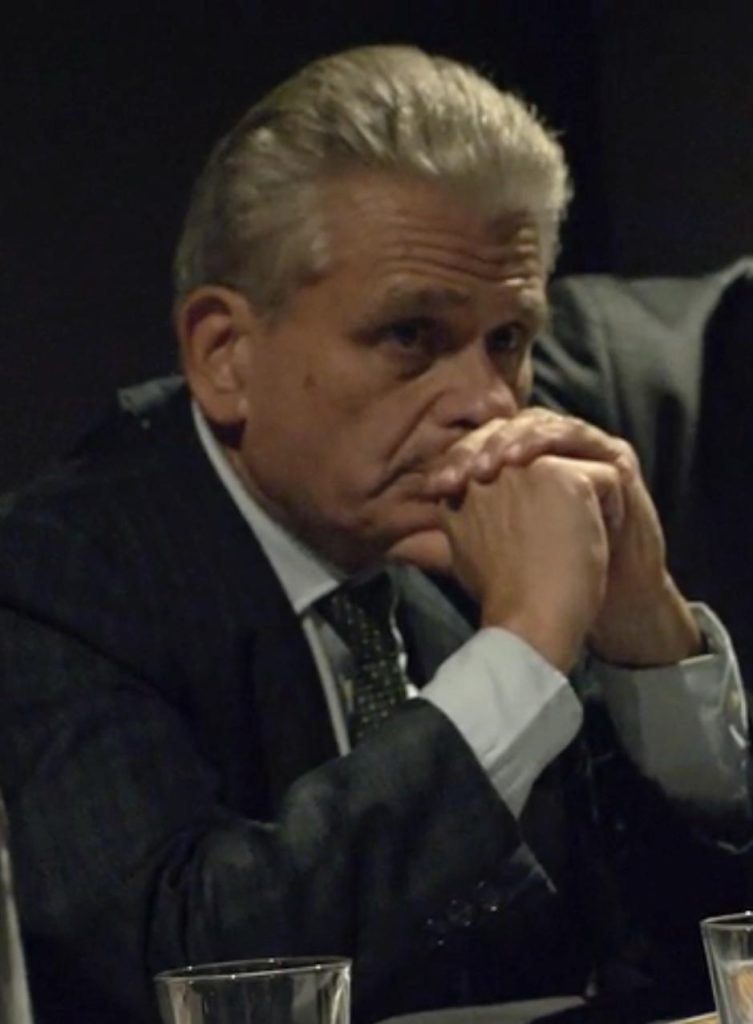
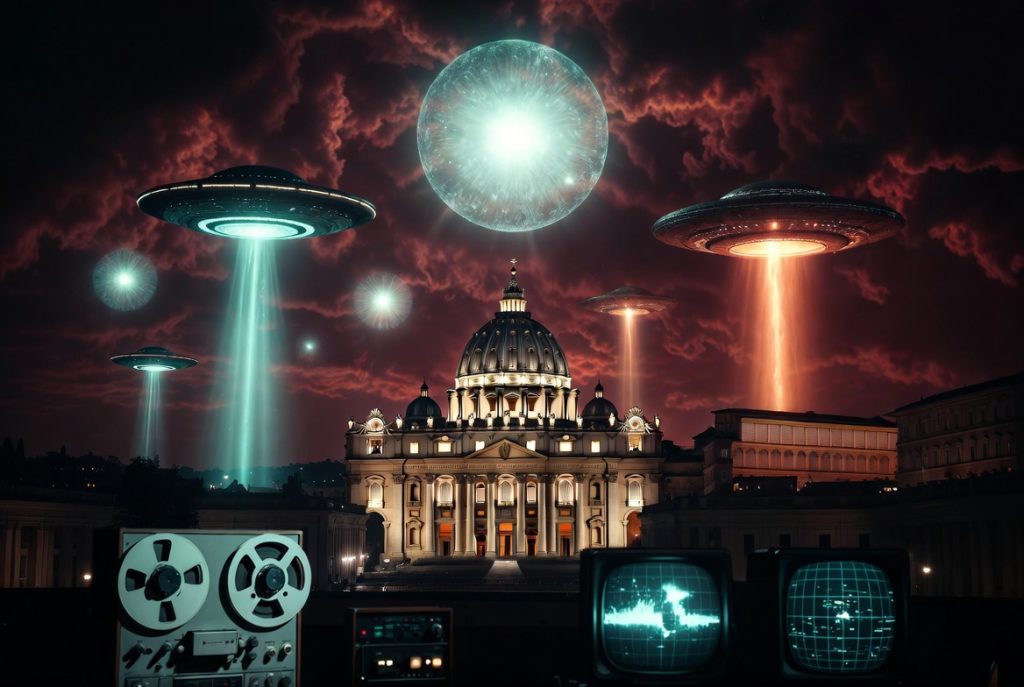
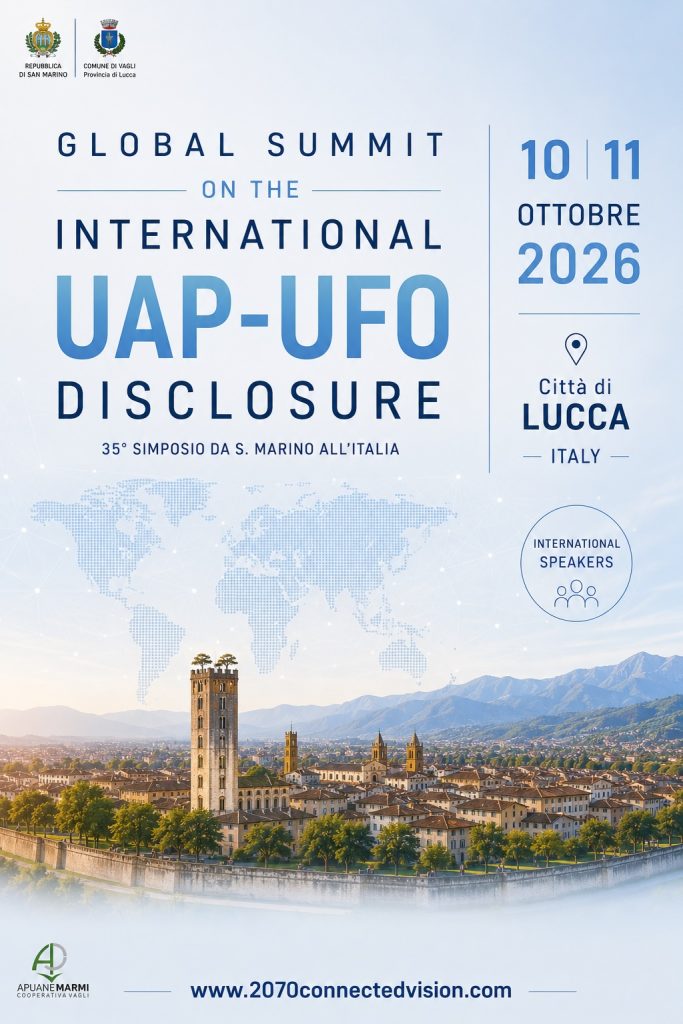
Dr. Roberto Pinotti, founder of Italy’s Centro Ufologico Nazionale, The International Coalition for Extraterrestrial Research, and a longtime friend whose stubborn archival work has made the annual San Marino symposium possible since 1993. This year’s congress on October 11–12, 2026, has been moved to the Grand Hotel Guinigi in Lucca, Tuscany, because logistics in the ancient minuscule republic no longer allow it. The stated goal is explicit: disclosure must be global, not merely American, and as suggested in private by Roberto, that next year an even bigger event will be held in Dubai to achieve further international exposure. Italy was never a latecomer to the UFO scene, but the actual initiator of the whole thing, including the UFO reverse engineering passed on to the infamous Legacy Program. Since the 1933 Magenta crash in Northern Italy and the subsequent UFO reverse engineering kickstarted by Mussolini, the Jesuit astronomers, with the help of thousands of Top Secret files long buried in the Vatican Archives, have managed to build the present theological framework for alien visitors, transforming them, since the 1950s, into marvelous creations of God, while Evangelicals and the Orthodox religion treat them as demonic agents of a coming spiritual war.
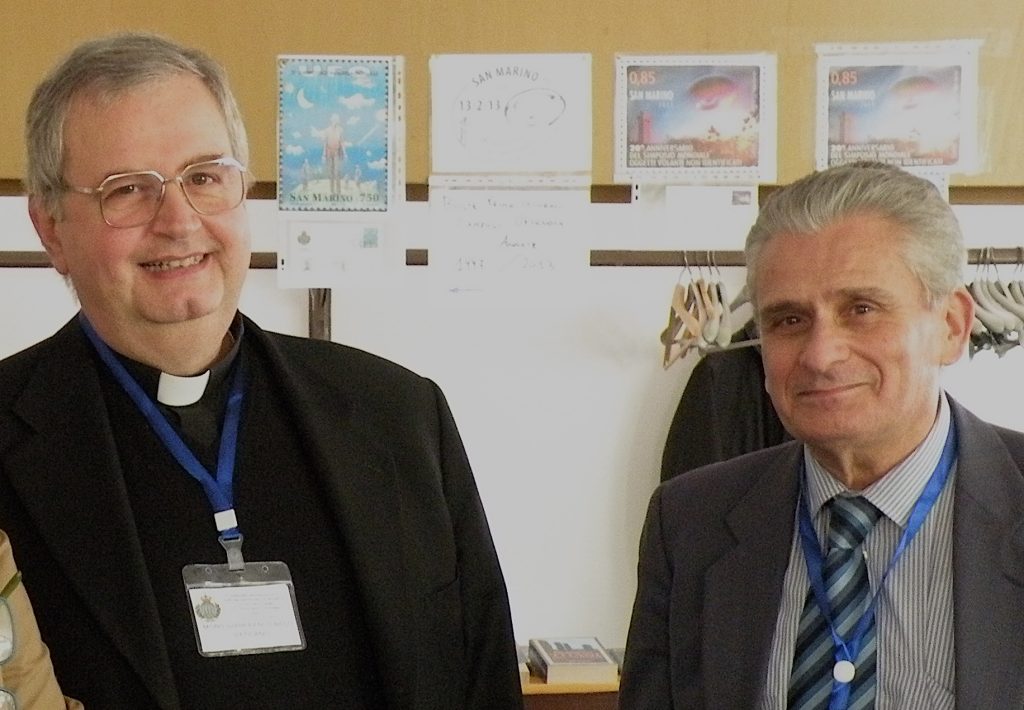
Soft disclosure, Hollywood conditioning included, has always served to manage the opposing sides of the UFO/UAP narrative and the relative exopolitical game, helping the Jesuits in their Divide et impera (Latin for “divide and rule” or “divide and conquer”), a strategy built by the Vatican to gain and maintain power by breaking larger power concentrations, groups, or opposition into smaller, more manageable pieces. The event in Lucca’s goal is to do the opposite. There will even be a Vatican voice in the room, Monsignor Professor Gianfranco Basti of the Pontifical Lateran University.
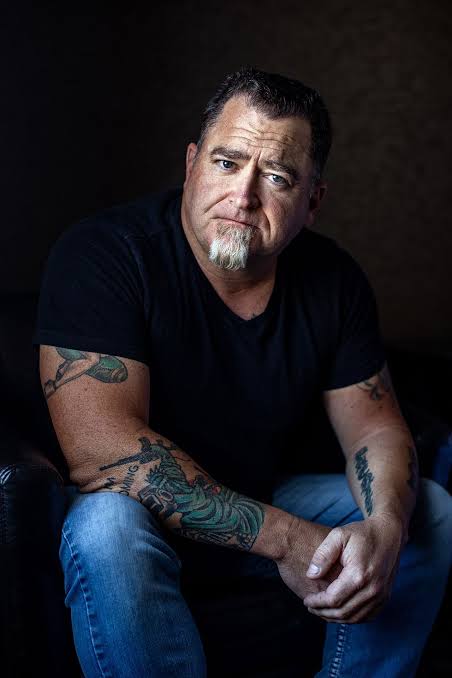
Roughly twenty specialists from fifteen countries are gathering from tomorrow under the chairmanship of Vladimiro Bibolotti, Moreno Tambellini, Massimo Favero, and Pinotti. Filming is handled by Alfredo Benni; organizational and technical support comes from CUN board members Federico Carbone, Sandro Marcugini, Patrizio Caini, Mauro Panzera, and Elisabetta Nasuti. The American contingent is heavy with people who have already operated inside the system. Luis Elizondo, former director of the Pentagon’s Advanced Aerospace Threat Identification Program, will address national-security and intelligence angles. Elizondo and his team tried to set up a private meeting with me in Palm Springs, which I turned down. If we are going to talk, it will be in public, on my podcast, after Lucca, not behind closed doors while the disclosure script is still being written.
Former NASA Associate Administrator Mike Gold brings the commercial space and public/private perspective. Attorney Mark Mersel of the Disclosure Foundation will cover the legal and governance side. Peter Skafish, executive director of the Sol Foundation, represents the push for interdisciplinary academic work. Retired USAF Captain Robert Salas, a direct witness to UAP interference with nuclear ballistic-missile launch facilities, will speak from operational experience. Historian Don Schmitt, another dear friend of mine, accompanied by his wife, will revisit the Roswell documentation he has spent decades assembling.
Senator Eric Burlison has not yet confirmed in person, but he might; and if he cannot attend, Elizondo is prepared to present Burlison’s filmed statement for the participants. Asia and the official European record are also on the program. Japan’s National Diet member Yoshiharu Asakawa will appear with interpreter Ryo Kikuchi. Sabir Hussain represents the Indian Society for UFO/UAP Studies in Chennai. Yan Jin, vice president of the World Chinese Space Science Association, carries the Chinese scientific-cooperation brief. From France comes Jean-Jacques Velasco, former director of GEPAN and SEPRA at CNES. Norway’s Erling Strand, founder of the Hessdalen Research Project, will detail decades of instrumented observation. Portugal’s Francisco Mourão Corrêa, ICER coordinator for Europe, links academic and exopolitical networks.
Italy’s own institutions are no longer absent, as there will be Colonel Andrea Marradi of the Italian Air Force General Security Department, officially known as the Reparto Generale Sicurezza (RGS), whose historical headquarters are in the same building of the “Ministero dell’Aeronautica,” where I served between 1989 and 1990. Marradi, whose office is the same one that tracked the phenomenon since 1979 and holds more than five hundred official dossiers, will participate, along with retired Navy Commander Clarbruno Vedruccio. The Italian paper trail begins decades before AATIP, and it runs straight through the Magenta era the Vatican Archives have never fully opened.
Monsignor Professor Gianfranco Basti of the Pontifical Lateran University, whom I’ve discussed in detail in my latest book, will be there to discuss quantum physics, rather than UFOs and aliens, as the present Jesuit-managed agenda seems to not want him to be overly open at the moment, but who knows what’s going to happen in Lucca in the next couple of days as the chairmen of the event is Vladimiro Bibolotti the president of Italy’s National Ufology Center (Centro Ufologico Nazionale), who spoke earlier this year at a public event at the Vatican on April 29, 2026.
San Marino’s Hon. Augusto Casali, political backer of Pinotti’s symposium since 1993, keeps the original host country’s presence alive. South America and the remaining European voices complete the map. Andrea Pérez Simondini, ICER representative for the continent, will speak for Argentina; Senator Victor Sanzberro of Entre Ríos has not confirmed, so she may present his filmed remarks on creating an official anomalous phenomena register. Germany’s investigative journalist and filmmaker Robert Fleischer will deliver his own contribution and, if needed, the filmed presentation of European Parliament member Fabio De Masi, who has not confirmed live attendance. Switzerland’s Guido Ferrari, former journalist and filmmaker for Televisione Svizzera Italiana and ICER’s Swiss representative, rounds out the list. The organizers, Pinotti and the CUN circle, who I have known and admired for years, are not claiming the phenomenon has been solved, but they are insisting that France, India, China, Norway, Japan, Portugal, Germany, Switzerland, Argentina, and Italy already possess data the public has never seen that they could eventually be presented if the United States continues to disappoint in their disclosure efforts.
The question the Lucca congress still has to answer, and the question The Vatican’s Top Secret Alien Agenda forces into the open, is whose disclosure this really is? The governments now declassifying files, or the Vatican that have held the theological script since the Jesuits took the Vatican astronomical sector permanently in their hands in the 1930s, after the Magenta crash? Private meetings in Palm Springs with Elizondo and friends will not settle it. A public conversation on The Leo Zagami Show after the event might, so I will keep you posted on all the proceedings of the event in Lucca and what follows next. In the meantime, get yourself a copy of my latest book and be ready for a new groundbreaking upcoming literary project in the making that, for the first time will be co-written Roberto and me in 2027.
Amen and check out The Leo Zagami Show!
The Vatican’s Top Secret Alien Agenda is still dominating the Amazon Best Sellers charts!From hidden encounters and forbidden rituals to the classified discoveries of Jesuit astronomers, this book blows the lid off centuries of cosmic secrecy in the age of UFO disclosure.Don’t get left in the dark. Find out what they aren’t telling you.
👉 Grab your copy on Amazon today!
Get also Leo Zagami’s THE RISE AND FALL OF A FRANKIST MONSTER, Exposing Jeffrey Epstein and the Most Powerful Jewish Sect in the World
Leo Zagami’s Confessions of an Illuminati Volume 12: History, Secret Societies, and the Politics of the Jesuit New World Order and their Luciferian Court, the book the Vatican doesn’t want you to read
Unlock the Most Dangerous Weapon Ever Created: The Human Mind. For centuries, the elite have controlled populations not with armies alone — but by mastering the art of mind control so get Confessions of an Illuminati Volume 11: The Past, Present, and Future of Mind Control from Sun Tzu to MK-ULTRA and Beyond
GET ALSO the shocking Confessions of an Illuminati Volume 10: Islamic Freemasonry and the Secret Societies Behind the Eternal Conflict in the Middle East
Don’t forget also the groundbreaking Confessions of an Illuminati Volume 9: Seven Steps to The Secrets of the New World Disorder from Transhumanism and Immortality to Gnostic Jesus, UFOs, and Insect Witchcraft
You cannot miss this truly revealing book about the real Hollywood Illuminati: Confessions of an Illuminati Volume 8: From the Rise of the Antichrist To the Sound of the Devil and the Great Reset
And the best-selling book Confessions of an Illuminati Volume 7: From the Occult Roots of the Great Reset to the Populist Roots
SUPPORT LEO’S WORK BY BUYING HIS BOOKS!!!
Leo Zagami is the author of the groundbreaking book Confessions of an Illuminati Vol. 6.66 The Age of Cyber Satan, Artificial Intelligence, and Robotics
GET also Confessions of an Illuminati Volume 5: The Decline of the West and the Rise of Satanism in our Society with a brand-new chapter on the CCP virus and The End Times
And last but not least if you already have the first 3 volumes, Confessions of an Illuminati Vol. 4, American Renaissance 2.0 and The Missing Link From the Invisible World